On most sites, manual handling injuries are so common that individuals nearly quit speaking about them. You hear extra concerning drops from elevation or electrocution, but the silent damages comes from training, carrying, pressing and drawing the wrong way, every day. Shoulders go initially, after that backs, after that knees. Suddenly an excellent tradesperson is off work for months, or never ever comes back.
The Australian White Card, and specifically the system CPCWHS1001 - Prepare to work securely in the building sector, is purposely basic. It is implied for every person, from a first year apprentice in Adelaide to a job supervisor strolling sites in Darwin. Yet when it involves manual handling, those "standard" concepts are exactly what separates a long, healthy career from early burnout.
I have actually enjoyed solid workers wound themselves on a "absolutely nothing lift" at 3 pm Friday, and I have enjoyed small-framed employees last three decades due to the fact that they were disciplined regarding how they moved and what lots they approved. The distinction was not stamina, it was habits.
This item walks through just how the key White Card concepts relate to hand-operated handling in genuine building and construction settings, and exactly how to transform the theory from your building and construction induction card into something you actually make use of at work.
Why handbook taking care of issues greater than individuals admit
Most individuals just connect hand-operated taking care of to obvious heavy training, like moving LVL beam of lights or bags of concrete. The injury stats tell a different tale. A lot of serious stress originate from:
- Repetitive shovelling or raking Awkward turning while carrying sheets Working bent over for hours Pushing filled trolleys on harsh or sloping ground Carrying tools and materials up scaffolds or stairs
The Structure and Building Award 2020 and WHS regulations do not simply respect "large lift" events. They require companies and workers to take care of all sensibly direct risks, including seemingly routine jobs. That is why basic building induction training (your White Card course) invests significant time on hand-operated jobs, not just on falling from elevations or electric safety and security on building sites.
On a real site, hand-operated dealing with concerns additionally incorporate with various other hazards. Silica dirt on building and construction sites, warmth stress in summer, noise on a building website, and trip risks in untidy workplace all boost the threat of a poor lift or fall while you are lugging something. You can not deal with hands-on handling in isolation.
When you rest your White Card course, whether in Hobart, Adelaide, Darwin or Perth, the trainer is not just aiding you pass an analysis. They are attempting to reset your default strategy to manual labor: strategy first, then move.
The White Card framework: how CPCWHS1001 takes a look at hands-on tasks
The system CPCWHS1001 Prepare to function securely in the building sector sits behind every genuine Australian White Card, despite state or area. So whether you hold a SA White Card, a NT White Card, a VIC White Card or a New South Wales White Card, the core assumptions around hand-operated handling are the same.
In CPCWHS1001, hand-operated handling rests inside a bigger reasoning:
First, you identify hazards.
Second, you assess the risk. Third, you regulate the danger using the power structure of control. Ultimately, white card adelaide training you report and review.When the topic is a hefty or awkward lots, that abstract process converts into some extremely useful routines:
Think before you lift.
Ask if the load can be damaged down, moved mechanically, or relocated at a various time. Check the course of travel for journey risks, unsafe surfaces and overhanging obstructions. Coordinate with others if it requires a team lift.That is why numerous White Card course concerns around manual handling are situation based. They will certainly explain a worker ready to bring something up a ladder, or lift above shoulder elevation, and ask what must be done. You are anticipated to apply the power structure of control, not just state "bend your knees".
If you have actually ever looked up "cpccwhs1001 white card responses" or "white card white card queensland examination inquiries and responses pdf", you will see a common theme. Good solutions seldom chat only about method. They discuss removing or lowering the hand-operated lift in the initial place.
Five core manual dealing with concepts every White Card owner ought to live by
Here are the crucial principles that ought to be force of habit for anyone with a building white card, from a labourer with their initial task to a site designer or task manager.
Plan the job as opposed to responding to it Respect your very own limits Use mechanical help whenever reasonably possible Reduce unpleasant positions and turning Keep communication and website organisation tightEach of these programs up, straight or indirectly, in White Card training. Let us unload just how they really play out on site.
Planning the lift: the behavior that protects against most injuries
On paper, preparing noises soft. On a live task, intending your manual handling task is the hardest, most efficient habit you can develop.
For instance, state you get on a mixed household website in Adelaide. The truck shows up late with plasterboard. The temptation is to "simply get it off" to avoid obstructing the road. If you hurry, you wind up carrying sheets across unequal ground, weaving around plant and stepping over extension leads.
A White Card minded strategy looks various. You rapidly walk the path, eliminate journey threats, speak to the driver, and rearrange the vehicle or make use of a mechanical help. You could take two mins at the beginning, but you shield your back and your routine. A stressed back on the first day can reduce a build for weeks.
On larger commercial jobs or business white card training teams, supervisors who prepare hands-on handling well do a couple of things constantly:
They develop hand-operated handling right into pre-starts, not as an afterthought.
They integrate shipment planning with hand-operated handling planning. Where the lots is gone down makes all the difference. They factor in exhaustion, warm and time of day. Moving hefty items in the noontime sunlight on a warm Darwin white card site is a different danger to moving them at 7 am.Good preparation also converges with building emergency treatments. If your gain access to means are jumbled with materials and ad-hoc storage space, not only is manual handling harder, however emptyings come to be slower and a lot more dangerous.
Respecting restrictions: yours and everybody else's
In every state, from white card Sydney sites to tiny jobs in regional Queensland, there is an unspoken culture around toughness. Individuals do not want to be the one that says "this is too heavy" or "we need assistance". That culture is accountable for a huge number of avoidable injuries.
White Card training attempts to change this attitude by making "speak out" and "quit working if harmful" explicit worker duties. That uses as much to lifting a 60 kg object as it does to operating at heights.
Some functional realities I have actually seen for many years:
A small-framed apprentice that declines to be pressured into a two-person lift ends up being a peaceful safety and security leader.
Older workers who admit their backs are not what they utilized to be frequently become the very best organizers, precisely since they understand what a bad lift costs. Supervisors who reward individuals for asking for aid swiftly see less injury reports and much less downtime.When you obtain a White Card and full CPCWHS1001, the lawful message is clear. If you intentionally try a job past your capability without utilizing controls, you are part of the problem, not a hero. Valuing limits is not weak point, it is conformity with WHS legislation and a smart job move.
Mechanical help: transforming "tough work" right into wise labour
The construction industry still carries some old practices of "just utilize muscular tissue". Yet nearly every major WHS regulator assumption in Australia leans greatly on using mechanical help where sensibly practicable.
On a typical day on a site, mechanical aids may indicate:
- A cart or pallet jack for duplicated transportation of materials A material hoist or crane for obtaining lots to top levels A vacuum cleaner lifter for glazing or big panels A block or block elevator on larger stonework jobs A powered wheelbarrow or skid steer as opposed to manual carting
The White Card course material will not educate you on every item of plant thoroughly. That comes with particular high risk work licences or job training, such as dogging and setting up, running EWPs, or specific plant equipment safety and security training. What the White Card does is established the assumption that you should search for means to get rid of or decrease hands-on lifting by utilizing tooling and devices, and to never ever run plant without the right ticket or instruction.
There are 2 usual issues I see on websites:
First, mechanical help exist, however they are inadequately preserved or tough to access, so workers prevent them.
Second, new employees, especially pupils that are new to building, assume that ordering whatever neighbors (like an uninspected trolley with damaged wheels) is "utilizing an aid", when as a matter of fact it presents a various hazard.
Supervisors and PCBU reps must treat hand-operated handling similarly to various other safety and security subjects: if the job needs an aid, the help needs to be available, kept and covered in site inductions. A White Card is not a replacement for plant training, however it needs to offer employees the instinct to ask for that training or guidance before they make use of anything unfamiliar.
Body mechanics: utilizing method without claiming it resolves everything
You will certainly listen to the timeless suggestions in every White Card training room: keep the lots close, bend the knees, maintain your back neutral, avoid turning. These are all appropriate, however they are the last line of support, not the first.
The hierarchy of control in CPCWHS1001 is clear. Before fretting about technique, you try to remove or reduce the requirement for the hand-operated task itself. That may be by altering the series of job, ordering materials in smaller sized devices, or reconsidering storage.
Once a hands-on lift or push is still needed, method matters. From sensible experience, the essentials are:
Keep the lots as near to your body as possible. The additional far from your spine, the more stress and anxiety it creates.
Move your feet as opposed to twisting with your back. If you require to turn, take little steps. Prevent lifting above shoulder height. Usage hosting, platforms or two-person lifts for higher placements. Utilize your legs and hips, not your lower back, to create effort on the preliminary lift. Establish the lots down by bending through the knees and hips rather than simply flexing your spinal column.On film established white card work, where the job combines building with hectic creative needs, I have actually seen people rush to move lighting gears or established walls without any believed to stance. The very same concepts use whether you are on an industrial tower or a short-term set: technique assists, yet only after you have done what you can to make the job smaller sized and safer.
Site organisation, housekeeping and manual handling
You can not speak about secure lifting without speaking about the state of the website. Poor home cleaning is among one of the most typical White Card analysis topics, and there is an excellent reason for that.
It is rare that a back injury comes from a textbook lift on even ground, with lots of area and no distractions. It generally takes place when you tip on a loosened offcut, trip over a hose, or twist to prevent one more worker at the last second.
Construction site indicators and site regulations that require tidy, clear sidewalks are not "wonderful to have". They are vital controls for hands-on handling and for construction emergency situation procedures. Quick discharges are difficult with chaotic paths, and cluttered paths turn every hand-operated task right into a higher risk problem.
Noise on building and construction sites additionally plays a role. If employees can not hear each various other, coordinating group lifts becomes harder. Miscommunication during a two-person lift is a typical cause of sudden lots changes, which can shake a back and cause strains.
Well run sites make great manual managing less complicated by design. They position materials near their factor of use, maintain clear accessibility, and separate pedestrian and plant routes to minimize the demand to dodge equipment while bring something.
Specific trades, details hands-on handling risks
The White Card is general, however different roles encounter various manual handling patterns. A couple of examples:
Carpenters and formworkers take care of long, awkward tons like LVLs, create ply and structures. Their main threat is turning with the back or functioning above for extended periods.
Bricklayers and blocklayers deal with repetitive loading, frequently in the exact same stance. Their threats build up slowly, specifically in shoulders and reduced back. Electrical experts and plumbings invest a great deal of time in ceilings, under floorings, or in confined services locations, usually carrying tools and little parts. The unpleasant postures are the problem greater than the weight. Painters bring ladders, relocate furniture and handle 10 or 15 litre tins. Shoulder and neck issues are common, especially when rolling expenses for long periods. Shipment vehicle drivers with a White Card, bringing products to several sites a day, face duplicated lifting, tailgate job, and loading or confiding sloped or rough surface areas. 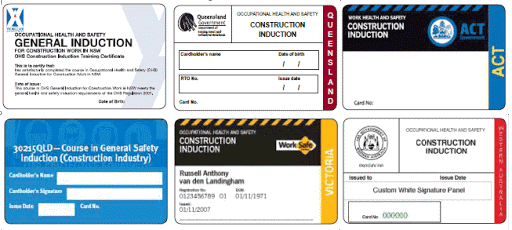
The White Card question "do electrical contractors need a White Card" or "do painters require a White Card" has a simple solution: yes, if they are getting in building and construction sites. The deeper point is that every trade's repetitive patterns have to be managed. White Card concepts offer a common language for that management.
For apprentices, comprehending hand-operated managing early is part of construction instruction requirements if you want a long career. Numerous TAFEs and RTOs in Adelaide, Darwin, Hobart and various other cities weave functional hand-operated job assessments into the CPCWHS1001 course to drive this home.

Hazardous atmospheres that amplify manual dealing with risk
Some site problems transform an ordinary lift into a high risk job. The White Card course content discuss unsafe compounds, heat and various other environmental aspects, and they all converge with hand-operated handling.
Asbestos construction sites need to restrict hand-operated disruption as long as possible. Any hands-on activity of asbestos containing products should be securely regulated, with stringent procedures and PPE. Raising or dropping these products can release fibers, so preparing and guidance should be meticulous.
Silica dirt on building sites, typically from reducing concrete, bricks or made rock, also demands cautious handling. Dry sweeping dust, or hurrying through material handling in dirty areas, raises respiratory threats. Making use of water suppression, extraction, and respiratory PPE while additionally considering weight and pose is not optional.
Heat anxiety on building websites impacts hold strength, balance and choice making. I have actually seen experienced employees misjudge a simple lift late in a hot day because they were dried out and tired out. Shifting hefty products at the optimal of the day in Queensland is merely a various threat to doing white card vic delivery time it in a cool Tasmanian morning.
Wet and sloppy sites, usual in some parts of South Australia and the North Region throughout certain periods, turn slopes and ramps right into slip zones. Pressing a wheelbarrow or cart on a wet slope needs much more preparation than on completely dry concrete.
The White Card system does not pretend you can "strategy" your escape of these atmospheres. It anticipates workers and managers to incorporate environmental protections, PPE, and manual handling controls in one plan.
Manual handling and the regulation: employer and worker duties
Across construction licences in Australia, from little domestic contractors to huge business professionals, the WHS responsibilities are consistent. PCBUs need to provide a secure work environment, systems of job, info, training and supervision. Employees have to take practical care for their own health and safety and that of others, and comply with sensible instructions and policies.
The White Card course is one way companies fulfill the training item. Whether you do a White Card course Adelaide, White Card course Hobart, or White Card course Darwin, CPCWHS1001 sets a baseline understanding of hands-on jobs and various other hazards.
Employers need to not quit at induction. Tool kit talks, job particular training, and supervision on hands-on handling are all expected. For instance:
When presenting new materials or items, explain their weight, managing demands and any type of special hazards.
Before big deliveries, brief staffs on just how products will certainly be unloaded, relocated and stored safely. When a person records pain or near misses, investigate and readjust approaches, not simply tell them to "be careful".Workers, in turn, have legal responsibilities. If your White Card training in Adelaide or Perth covered appropriate strategies or highlighted constraints, and you ignore these and improvise dangerous approaches, you are breaching your tasks. Safe hand-operated handling is a common legal commitment, not just personal preference.
Bringing White Card theory onto a live website: a basic day-to-day checklist
To bridge the gap between your White Card declaration of accomplishment and daily routines, it aids to run an extremely quick mental checklist before any significant hand-operated job:
Can this task be avoided or decreased with better preparation or sequencing? Can I make use of mechanical help, or obtain the load provided closer to point of use? Is the path of traveling clear, completely dry and well lit, with no trip risks? Do I need aid from another person, or a different approach totally? Am I personally fit, moisturized and concentrated enough to do this safely now?If you can obtain new workers, specifically those fresh from a White Card training Adelaide SA or Darwin NT course, to run this five second check naturally, you protect against a surprising variety of pressures and sprains before they happen.
White Cards, state differences and what it suggests for hands-on handling
A lot of individuals are not surprisingly confused by variations like SA White Card, NT White Card, White Card Victoria, or inquiries such as "does a NSW White Card run out" or "white card NT 60 day rule". The key points for hands-on handling are straightforward.
The system CPCWHS1001 is nationwide. Whether you made it through White Card training Perth, a White Card Brisbane RTO, or a White Card Canberra carrier, the exact same handbook handling concepts apply. White Cards are usually acknowledged across Australia, although each state or region may have management traits around distribution, replacement, or document keeping.
For example, if you lose your card, you follow your releasing state's process for substitute, such as replacement White Card WA or White Card substitute SA. The hands-on handling assumptions do not alter with the brand-new card.
Most territories do not have a repaired expiration for White Cards, but employers might require refresher training or verification, specifically if you have actually been out of building and construction for many years. Manual managing methods develop, and good employers understand that a solitary training course at the start of an occupation is not enough.
Practical guidance for employees new to construction
If you are beginning in building and construction and ready to create a USI, sign up in a CPCWHS1001 training course, or ask "can I do White Card online", here are some grounded suggestions based upon what in fact matters on site:
Pay attention to the hand-operated handling sections of your training course, even if you currently feel physically strong. The habits you develop very early last.
Deal With the White Card not as a box tick, but as authorization to speak out when a manual job looks inadequately planned. Enjoy older tradespeople who have actually stayed healthy and balanced. See just how they relocate, just how they present products, and just how rarely they rush a lift. If you relocate right into roles like website supervision, task monitoring or engineering, remember your White Card. You might do much less lifting yourself, yet your choices on distributions, accessibility and sequencing define exactly how hard every person else's bodies function.Whether you get on a high rise job in Melbourne, a civil task near Mackay, a remodelling in Campbelltown, or a remote NT website, the physics of training do not transform. Just your discipline does.
Good manual handling is not attractive. It does not win honors or attribute on glossy job images. It silently maintains people in the industry longer, decreases lost time injuries, and keeps the focus on structure as opposed to recovering.
Your Australian White Card provides you the baseline. Deal with guidebook handling as one of the core skills that separates an experienced specialist from somebody who will certainly not last the distance.